

Paphos lifestyle · What's trending now
Autumn in Paphos: the food, jazz and outdoor season locals actually turn up for
September 23, 2026 · 7 min read
The short answer
Autumn may be the loveliest time to be in Paphos. From late September to November, the calendar fills with street food by the medieval castle, jazz at Ibrahim's Khan, climbing in Ineia, local walks through the old town and open-air shows in Tala. Days are often still in the mid-20s, and the sea usually stays warm enough for a swim well into November.
Visit Paphos in July and you see the holiday version of town. Come back in October and it feels completely different. The traffic eases, lunch becomes unhurried again, and the events are mostly filled with people who live nearby.
It is a wonderful time of year. You can still swim before work, then reach for a light jacket after sunset. Most weekends bring something worth leaving the house for, whether that is food at the harbour, music in a stone courtyard, a walk in the Akamas or a village celebration you heard about from a neighbour.
So, what is Paphos really like at this time of year? This is what has caught our attention lately.
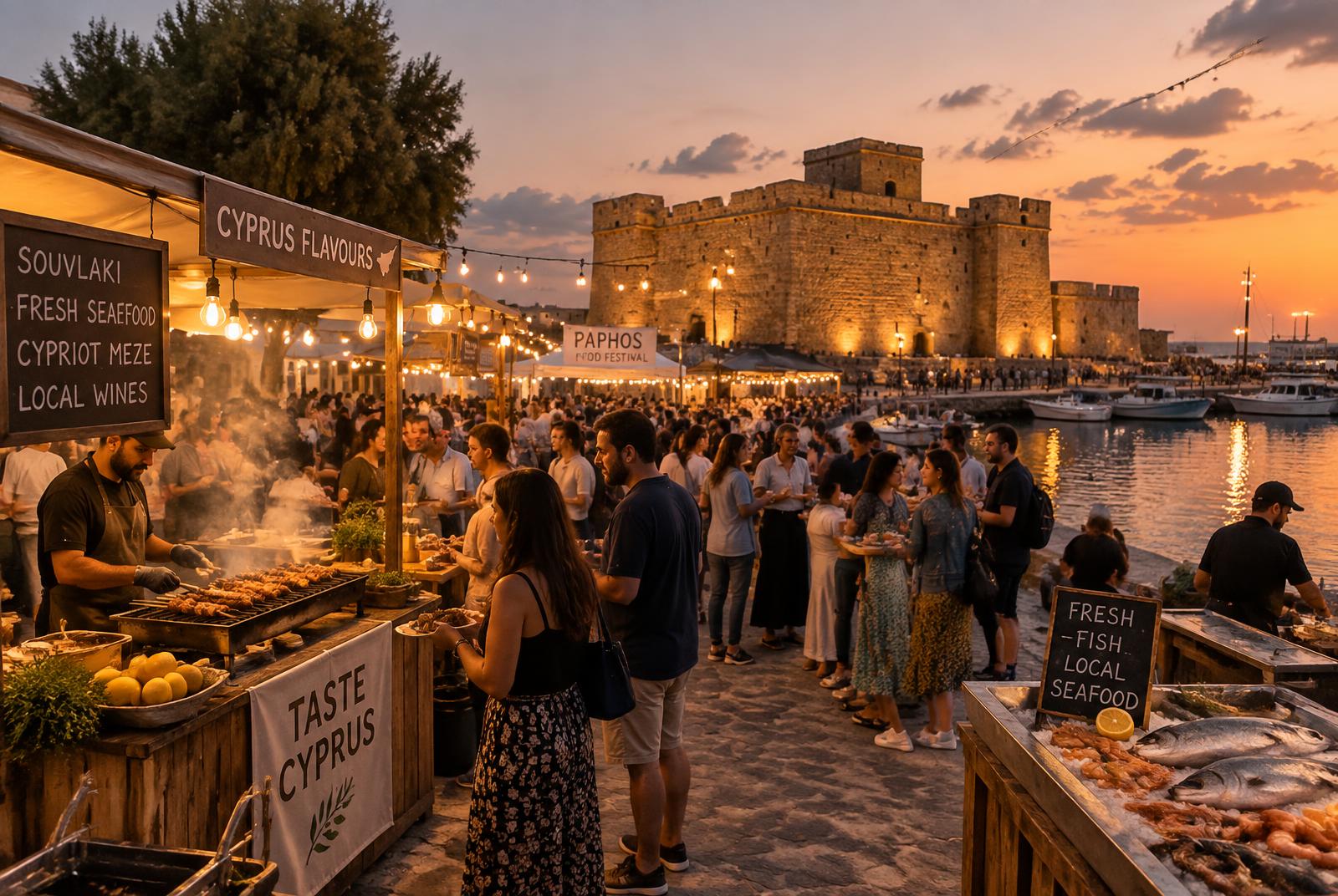
The street food festival that takes over the castle square
The Seaside Street Food Festival returns to Paphos Medieval Castle Square in mid-October for its autumn edition, running three days from midday until late. Entry is free. You pay for what you eat, and most stalls price a plate somewhere between a coffee and a cinema ticket.
The setting is hard to beat. The square sits directly in front of the 13th-century castle at the end of the harbour. On one side are the floodlit walls; on the other, fishing boats knock gently against the quay. You will find souvlaki, grilled halloumi, fresh seafood and Cypriot pastries, alongside Asian, Middle Eastern and South American food made by people who live in Paphos all year.
What makes it feel local rather than staged is the crowd. You see prams, teenagers on scooters, retired couples doing a slow lap with a plate of loukoumades, and groups of twenty-somethings who have clearly come straight from the beach. Nobody dresses up. Everybody stays longer than they planned.
A practical note: park in the town-side car parks above the harbour and walk down. The road along the seafront becomes a very slow river of cars by eight in the evening.
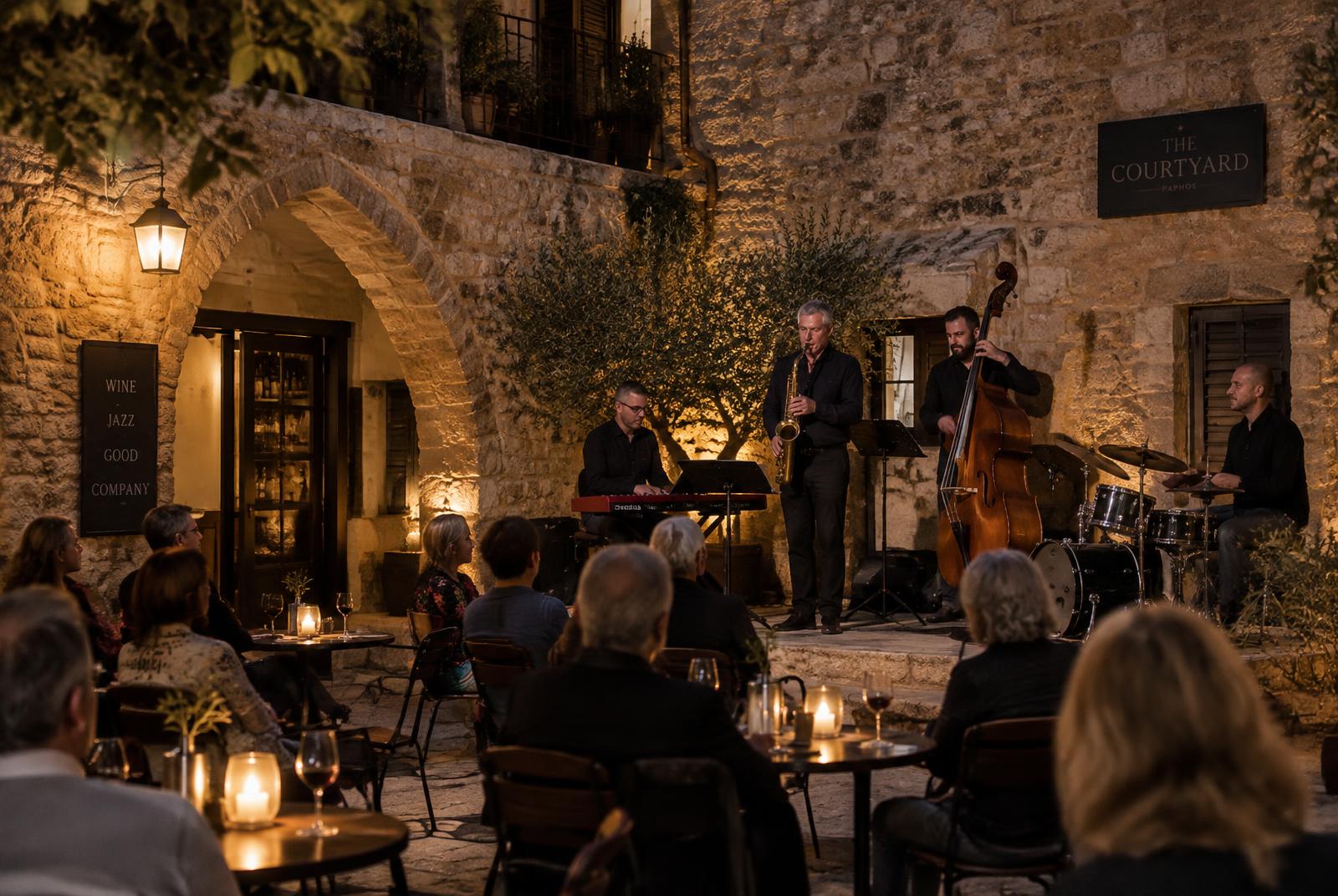
Jazz arrived in the old town, and it belongs there
One of the most interesting dates on the Paphos calendar is nowhere near the beach. It takes place in the old town, inside Ibrahim's Khan, a restored Ottoman-era inn wrapped around a stone courtyard near the covered market.
The first Technopolis 20 Jazz Festival runs there across two October evenings, with quartets and ensembles from Cyprus and abroad: jazz standards on the first night, contemporary and experimental sets on the second. Tickets sit in the €15 to €55 range depending on where you sit, and the courtyard holds a few hundred people at most, which is exactly why it works. You are close enough to hear the double bass without amplification.
It is also a good reason to stay in the upper town for the evening. In the last few years, this part of Paphos has found its own rhythm. There is the old market, a handful of small galleries, wine bars tucked into restored stone buildings and bakeries that can sell out before ten. It feels lived in, not arranged for visitors.
If the jazz festival sells out, the same neighbourhood runs live music most weekends through the winter. Ask at any of the bars on Nikodimou Mylona and somebody will tell you who is playing on Friday.
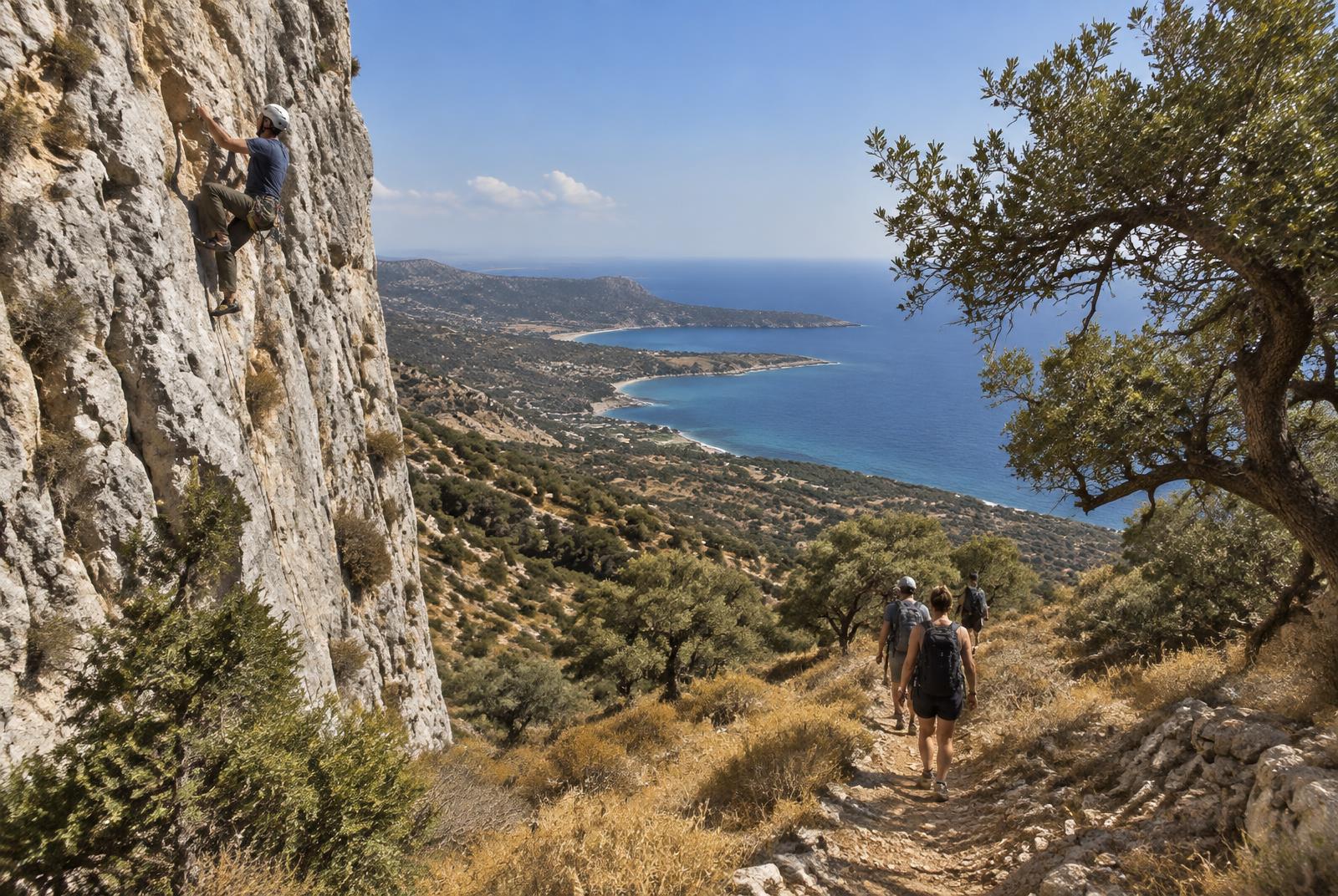
The hills are the real autumn story
Summer in Cyprus pushes everyone towards the water. Autumn opens up everything behind the coast, and this is the part newcomers consistently underestimate.
In mid-October, the Cyprus Rock Climbing Festival comes to Ineia, a mountain village about forty minutes inland from Paphos on the edge of the Akamas peninsula. For three days, climbers and walkers gather for workshops on the limestone crags, hikes, orienteering, photography, music in the village square and a rock-painting workshop for children. You do not need to be a climber. Plenty of people go for the walks, the atmosphere and the food.
That easy access to the countryside is one of the joys of living in Paphos. Within twenty minutes of leaving home, you can be on a proper trail. The Akamas gorges, Avakas canyon, the coast beyond Lara Beach and the Troodos foothills all become comfortable again once the fiercest summer heat has passed.
- Avakas Gorge: dramatic, shaded and about 90 minutes there and back from the parking area.
- Aphrodite Trail, Akamas: sea views for most of the walk, and best started early.
- Ineia to Drouseia: a village-to-village walk with a taverna at either end.
- Ezousa Valley: flat, quiet and a good choice with children or a dog.
The sea does not close in September
Newcomers from northern Europe tend to assume the swimming season ends with the school holidays. In Paphos it does not come close. The sea holds its summer heat well into November, and there is a small, consistent group of locals who swim at Municipal Beach and Faros every single morning of the year, then argue about the water temperature over coffee afterwards.
October water is frequently better than August water: the same warmth without the crowds, the jet skis or the queue for a sunbed. The blue flag beaches from Geroskipou to Coral Bay stay staffed, most beach cafés stay open, and the coastal path from the harbour to Kato Paphos is genuinely pleasant to walk again in the middle of the day.
This is the rhythm that quietly convinces people to move here. Not the two-week holiday version of Cyprus, but the ordinary Tuesday in November where you swim before work and wear a jumper in the evening.
Free walking tours, village amphitheatres and things that never get advertised
The free Meet the Locals walking tour returns in autumn. It starts in the morning and is led by residents, not professional guides. For someone new to town, those two hours are genuinely useful. You hear old-town stories and market gossip, but also learn which bakery people queue for, where to buy meat and which streets are a nuisance for parking.
In the villages, Tala amphitheatre continues with open-air dance and cultural performances into October. Stage One Theatre in Emba puts on English-language comedies, while grape, olive, wine and carob festivals pop up across the district at weekends. Sometimes the only notice is a painted sign beside the road or a post shared in a local Greek-language group.
That is genuinely how much of this town communicates. The single most useful habit for anyone new here is to follow two or three local event pages and accept that the best evening you have this month will be something you heard about three days before it happened.
What an ordinary October weekend looks like here
Saturday starts at the covered market in the upper town, which is busiest before nine: tomatoes that taste like tomatoes, village bread, olives from a barrel, someone's cousin selling honey. Coffee afterwards on Kennedy Square, where the conversation is Greek, Russian, English and increasingly Hebrew and Bulgarian at neighbouring tables.
By late morning, it is time for a swim. Lunch can stretch into the afternoon at a village taverna in Kathikas or Pegeia. Later, you might walk through the archaeological park in the softer light, follow the coastal path or simply do nothing.
Then the evening: the food festival, or the jazz courtyard, or a village panigiri, or a table outside a harbour taverna with the castle lit up behind it. Sunday is slower and usually involves the hills.
None of this requires planning, money or a car full of equipment. That is the actual product Paphos sells, and autumn is when it is most obvious.
Practical notes for your first autumn in Paphos
Bring a light jacket and one warm layer for the evening, especially if you are going inland to Ineia or Kathikas, where it can be several degrees cooler than the coast. Sea shoes are useful in rocky bays. It is also worth booking Sunday lunch at a popular village taverna, because local families do the same.
Rain does happen from November onwards, usually in short bursts that clear within hours. Houses here are built for heat rather than cold, so if you are viewing property in autumn, ask about heating, insulation and which way the living space faces. A south-facing terrace is the difference between using your outdoor space nine months a year and using it twelve.
And go to one thing you have not heard of. In a town this size, the festival at the end of your street is usually the best one.
Common questions about autumn in Paphos
What is on in Paphos in October?
October in Paphos includes the Seaside Street Food Festival at the Medieval Castle Square, the first Technopolis 20 Jazz Festival at Ibrahim's Khan in the old town, the Cyprus Rock Climbing Festival in Ineia, free Meet the Locals guided walking tours, open-air performances at the Tala amphitheatre, theatre in Emba, and village harvest festivals across the Paphos district.
Can you still swim in Paphos in October and November?
Yes. The sea around Paphos retains its summer warmth into November, and a core group of residents swims year-round at Municipal Beach and Faros. Most beach cafés and lifeguarded blue flag beaches stay open through the autumn.
Is Paphos quiet in the off-season?
Paphos is calmer, but it does not close. Visitor numbers fall from October, so restaurants, beaches and archaeological sites feel more relaxed. At the same time, the local calendar is busy with festivals, concerts, theatre and village celebrations.
What is the weather like in Paphos in autumn?
Daytime temperatures typically sit in the mid to high 20s Celsius through October, easing into the low 20s in November, with evenings that need a light jacket. Rain is occasional and usually short, and Paphos records around 340 days of sunshine a year.
Is autumn a good time to look at property in Paphos?
It may be the best time. You see the town at its everyday pace, can walk around neighbourhoods comfortably in the afternoon, and notice how a home feels in lower autumn light and cooler evenings. Those details are much harder to judge in August.
Thinking of staying longer than a holiday?
We have been building homes, apartments and villas in Paphos since 1961, often in the same neighbourhoods mentioned here. If you can picture yourself enjoying an October swim, an evening by the castle or a Sunday in the hills, leave your details with us. A local property expert will get in touch and help you explore homes that suit the way you want to live.